Dec 22, 2024
Many species have been used as raw materials in the surimi industry, from the most famous Alaskan pollock to tropical species like threadfin bream. Surimi is a refined fish meat that is also used to produce seafood products like crab sticks, fish balls, fish tofu, and many more.
The species used for surimi production is varied. Some species are famously known for their high quality and taste, but there are also lesser-known species such as goatfish and red mullet.
Both goatfish and red mullet are part of the tropical surimi’s pride. Their unique taste with affordability has led to consumer preferences in countries like Thailand and Indonesia.
This article will get you to know these two lesser-known species deeper. From the characteristics of goatfish and red mullet, their utilization in the surimi production, to their market dynamics, you will find everything.
Have a seat, have a read.
Get to Know Goatfish and Red Mullet
Goatfish (Upeneus spp) and red mullet (Parupeneus spp) are both tropical species and commonly found in Asian countries such as Thailand, India, Vietnam, and Indonesia.
· Goatfish
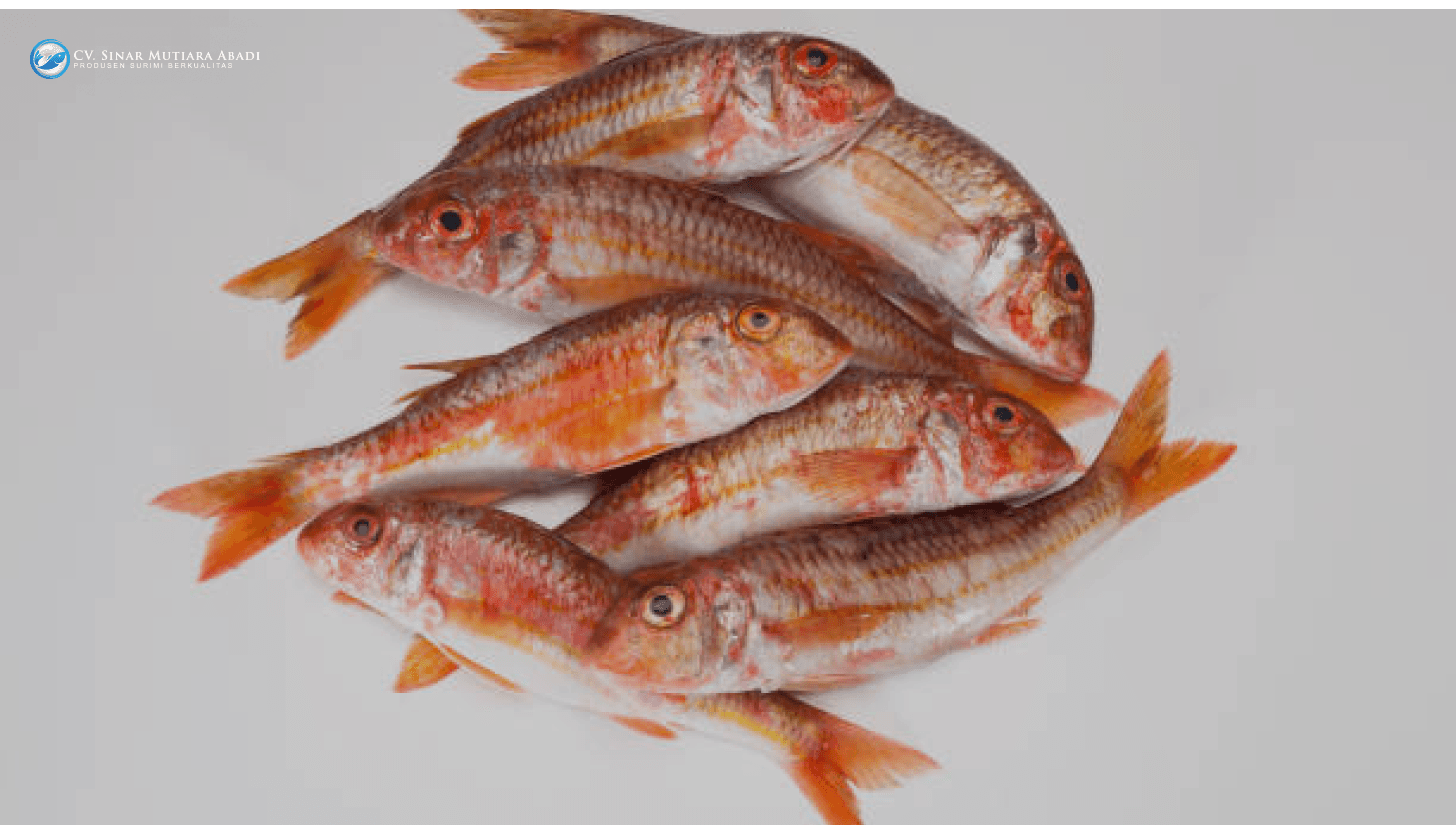
Goatfish are commonly seen near the reefs with bright colors, and they don’t travel too deep.
They are famously known for their two sensory barbels on their chin. This species uses its sensory barbels to dig into the sand or even poke into reefs’ holes to detect prey.
Fun fact: Those two sensory barbles look like whiskers, and they resemble a goatee, which is why they are called ‘goatfish.’
Many people love to make goatfish as their meal, but it is also common to use goatfish as fishing bait.
· Red Mullet
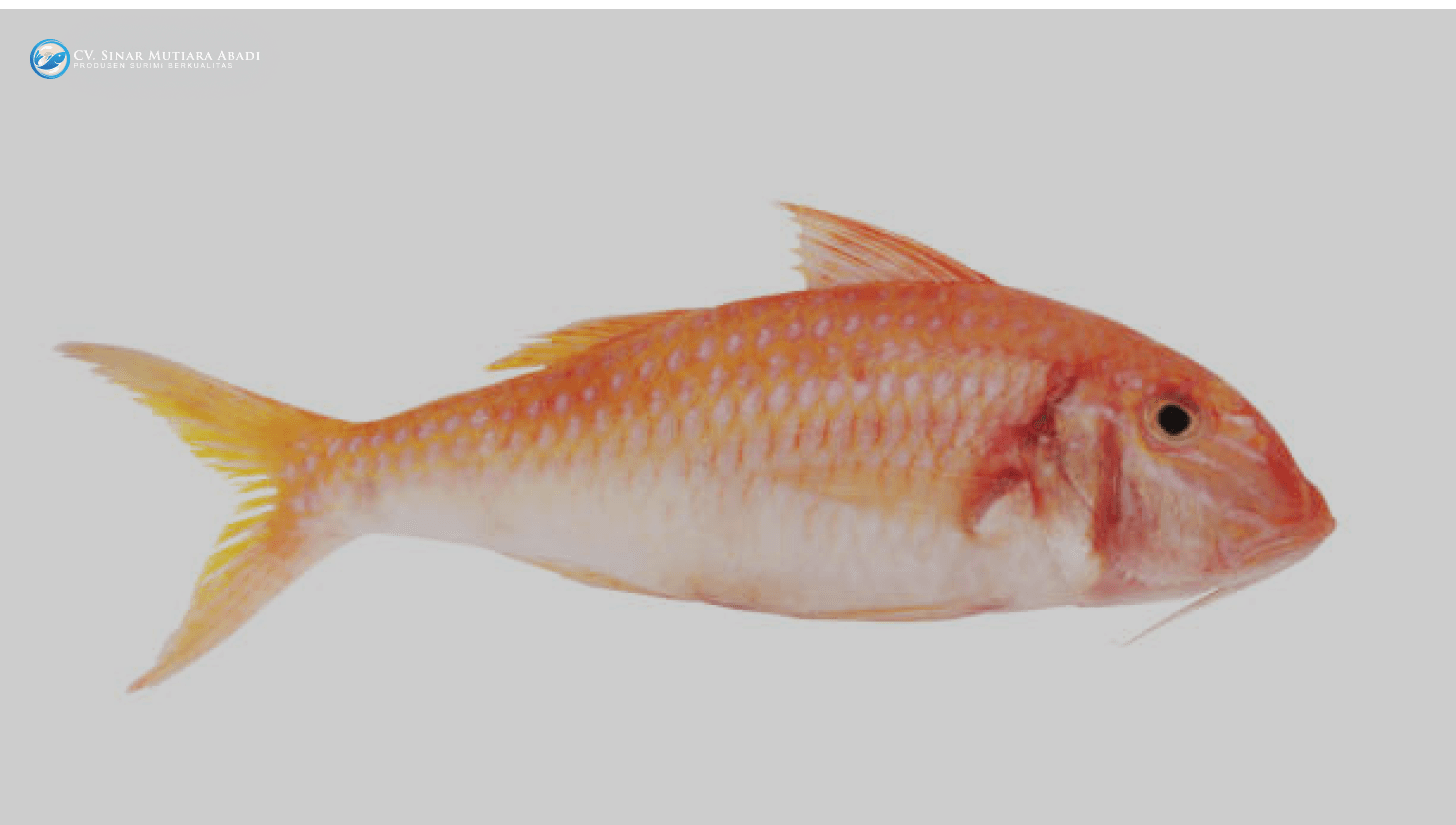
Red mullet is a type of goatfish that often has distinct yellow stripes on their bodies. This species also has sensory barbels on its chin.
This species is commonly found in silty areas near coastal areas and within the lagoon reefs.
And just like goatfish, red mullet is also used to consume. They even often get called ‘the woodcock of the sea’ because people like to cook them whole.
All species of goatfish can change their color quickly and blend themselves with their surroundings to keep them safe from predators.
Both goatfish and red mullet have big and small species. The big fish are around 100-200 g, which are either sold as whole rounds or processed into skin-on fillets. The smaller-sized fish are called Himeji in Japanese, and they are used as a main material for surimi production.
Utilization in Surimi Production
Goatfish and red mullet have been used as the raw material by tropical surimi producers in Southeast Asia. Surimi made from these species will later be used to produce surimi seafood like fish balls and sausage.
In southern sub-tropical Japan, these species are called Himeji. The production process for Himeji is just like any other tropical surimi production, which involves washing, mincing, deboning, and refining.
However, producing surimi from goatfish or red mullet can be a challenge because of their low quality. Goatfish are known for their muscles with high proteolytic activity. This made surimi produced from goatfish has poor gel quality.
That is why Whey Protein Concentrate (WPC) and CaCl2 are added in the production process to help improve the gel quality for the surimi.
Market Presence and Demand

Tropical species like goatfish and red mullet are often presumed to have low economic value because of their low quality, which is in fact more preferred by low-income customers.
Even so, according to research by the Southeast Asian Fisheries Development Center in 2007, goatfish and red mullet both play an important role in the economic sector. This is because of the use of both species in the surimi industry to produce value-added products in the form of surimi seafood, including fish sausage, fish balls, fish tofu, and many more.
In fact, the surimi industry has been through massive growth in its market in Southeast Asia using tropical fish as the raw material, including goatfish and red mullet.
In Thailand, goatfish are one of the tropical species that comprise more than 90% of all surimi raw material within the country. These species are also the most used raw material after threadfin bream in India.
While, in Shikoku Island, Japan, goatfish and red mullet are commonly enthused to be the main material of jako-tempura. It is a popular name for a special deep-fried kamaboko in the country.
Goatfish and Red Mullet Versus Other Species
In comparison to other species that are used as surimi raw material, such as Alaskan pollock and threadfin bream, the fact that goatfish and red mullet are lost in the level of fish quality can’t be denied.
With other tropical species such as threadfin bream with strong gel strength and lizardfish that has a firm gel-forming ability, it is reasonable why goatfish and red mullet are more preferred in countries like Japan, Korea, and China.
This doesn’t mean that goatfish and red mullet are not recommended for surimi production. Both species have a unique taste, which makes them preferred in some countries, especially by surimi producers in the Philippines since 1976.
The use of goatfish for surimi production is also increasing in Indonesia and Malaysia. Data shows that Indonesia even became the highest surimi producer of goatfish from 1997-2005. This means that tropical species like goatfish and red mullet still have high consumers in certain countries.
Conclusion
The reputation of goatfish and red mullet is still underrated compared to the other famous species from both cold water and tropical species, like Alaskan pollock or threadfin bream.
This might be because the two species are commonly known for their low quality. But they deserve an exploration and get more famous as part of the surimi industry.
Through this article, we simply want to share that these two species have been taking part in encouraging the surimi industry to grow in global production. The innovation of the surimi industry, especially in tropical surimi producers, has made both goatfish and red mullet appear as good value products.
Even though the quality of both species might not be as high as threadfin bream, goatfish and red mullet are uniquely important in fostering the economic sector and seafood industry in various countries.




Adress: Gajah Mada KM 4, Banyudono, Kaliori, Rembang 59252
Phone Number: +62 822 98989 169
E-mail: marketing@sinarmutiaraabadi.co