
Jul 8, 2025
Surimi is known as a refined fish myofibrillar proteins paste. However, the surimi manufacturing process can cause protein loss, including myofibrillar proteins, that will impact the quality of surimi.
Myofibrillar proteins are very important, especially for surimi seafood’s texture, such as Alaskan crab stick or imitation crab, as well as having the main role in gel-forming.
There are several factors that contribute to myofibrillar protein loss during the manufacturing process, yet scholars have recommended effective solutions to prevent it.
Protein Components of Surimi
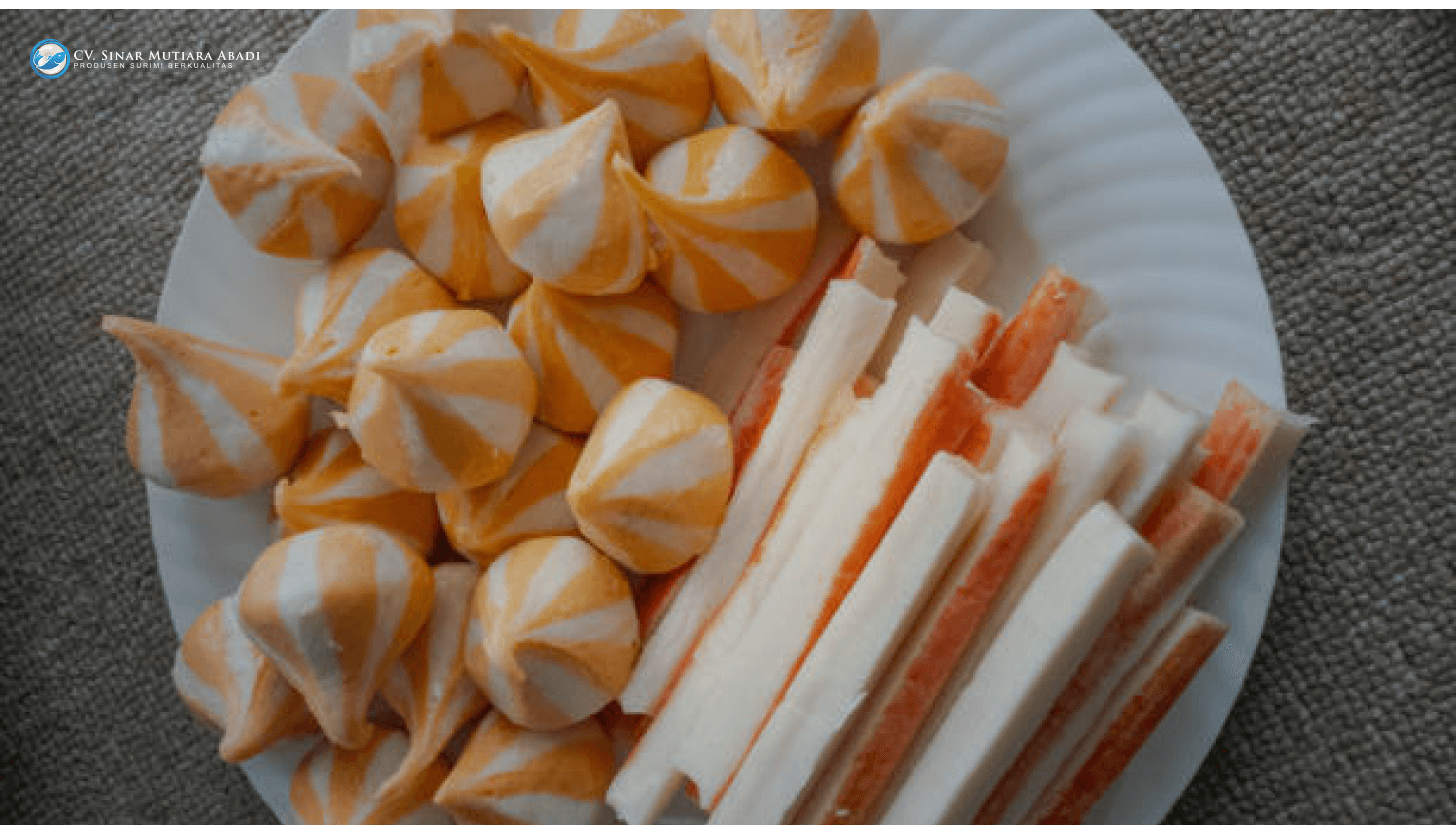
Surimi is popular for its proteins and health benefits. Surimi contains fish muscle protein components, which are divided into three groups, including myofibrillar proteins, stroma proteins, and sarcoplasmic proteins.
Myofibrillar proteins
Myofibrillar proteins are the primary components of surimi, which can form a three-dimensional gel network. Myofibrillar proteins consist of myosin, actin, tropomyosin, troponin, actinin, and many more. It comprises about 60% of myosin and 25% of actin, which is relatively the same for all fish species used in surimi production.
Myosin and actin are important for surimi production because they have the ability to form another complex protein known as actomyosin. The ability of surimi gel to perform when heated depends on the amount of actomyosin.
This protein is particularly a necessary component not only for surimi but also for surimi seafood’s texture. However, the processing of surimi and surimi seafood may result in the loss of myofibrillar proteins.
Stroma proteins
Stroma proteins are found in species like Pacific whiting from their connective tissue. Almost all these proteins are insoluble in water or salts, particularly collagen, which will tend to get retained during the refining process.
Fun fact: Fish only have stroma proteins in a way smaller percentage compared to their myofibrillar proteins. This made collagen has no significant role in the gel performance of surimi.
Sarcoplasmic proteins
Sarcoplasmic proteins are found in the fluids both within and between the muscle fibers. Most of these proteins have a tertiary globular structure, which is quite different from a fibrillar structure.
Sarcoplasmic proteins also contain a vast number of enzymes involved in muscle metabolism, such as enolase, creatine kinase, and aldolase (ADL).
Most contents of sarcoplasmic proteins are found in species like pelagic fish, whiting, and demersal fish. Whiting species are known with about 23.5% of sarcoplasmic proteins.
However, sarcoplasmic proteins are very necessary to get removed. This protein can cause trouble for protein myofibrillar that will disturb its gel-forming process.
The loss of sarcoplasmic protein will further benefit myofibrillar proteins, which automatically increases the quality of surimi.
Factors Contributing to Protein Solubility
As mentioned, protein loss could happen during the manufacturing process, especially the washing and dewatering process. During this stage, sarcoplasmic proteins are removed, therefore increasing the concentration of myofibrillar proteins.
However, this stage can also cause myofibrillar protein loss in wastewater. A small amount of myosin will get removed in the first wastewater, but it will automatically increase in the second wastewater and will remain constant for the next ones.
Sarcoplasmic proteins are easily removed and even found in a small amount in the third or fourth washing step. When this protein is completely removed, another washing step can cause myofibrillar protein loss.
Studies have confirmed that overly washing with the same amount of water will allow myofibrillar proteins to solubilize in water. Therefore, the washing process of surimi production, particularly the washing time and washing cycles, has a significant effect on myofibrillar proteins, which will then affect the quality of surimi.
Other than that, it is important to handle the fish used in surimi production properly to avoid temperature rise. Temperature is essential to keep myofibrillar proteins.
A temperature set too high can make myofibrillar protein proteolysis quite serious, which automatically forces myofibrillar dissolution as waste and results in poor-quality surimi.
Role of Salinity and pH in Protein Solubility
Salinity and pH are the other factors that can cause protein solubility as waste and impact the quality of surimi.
The fishing season is considered the main determinant of fish muscle pH and moisture content. Harvesting in the feeding period will result in high-quality surimi production because of the low pH and moisture content of the fish muscle.
However, harvesting both during and after the spawning season will result in the lowest quality of surimi production. This is because the pH of the spawning fish muscle is much higher.
As previously mentioned, myofibrillar proteins can dissolve due to certain factors. According to Park (2014) in his book Surimi and Surimi Seafood, fish myofibrillar proteins are classified as both salt and water-soluble.
The loss of myofibrillar proteins during the surimi manufacturing process is because they are washed repeatedly, forcing the proteins to become soluble and at the same time indicating that they are also water-soluble.
Moreover, pH also affects the protein when it gets closer to the isoelectric point. When it gets closer, both negative and positive charges are almost equal.
Myofibrillar proteins’ solubility is quite low because of the interaction between water and the protein at the isoelectric point. This results in repulsion among proteins and increases its solubility.
The solubility of muscle proteins increased at both extremely acidic and alkaline pH, especially when the pH shifted from 5 to 4 or from 10 to 11. At 10 mM NaCl, the solubility is considered low with a pH between 5 and 10, but will increase quite high when the pH shifts to acidic or alkaline.
Strategies to Minimize Protein Loss
There are some strategies that surimi producers can use to minimize protein loss.
The first one is controlling salt concentration (NaCl) in the washing solution. It is recommended by Park (2014) to use 0.25% - 1.0% of NaCl to prevent the loss of myofibrillar proteins.
Another way is by controlling and optimizing the water-to-meat ratio as well as the washing time, as these two highly influence myofibrillar solubility. It is also important to pay attention to the washing cycles. Setting limits for these activities is even better.
Moreover, it is effective to use 2.0% of NaCl during the first washing process to directly remove sarcoplasmic proteins. With this in mind, surimi producers will not need a second round of washing, which will protect the myofibrillar proteins.
Conclusion
On the whole, the surimi manufacturing process can cause protein loss due to excessive washing cycles, unmanaged washing time, temperature, high salinity, and high pH.
Myofibrillar proteins are necessarily needed for both surimi and surimi seafood production. The loss of this protein will impact the quality of the final product.
The solutions are varied, starting from controlling the salt concentration and water-to-meat ratio during the washing process, managing washing time and cycles to not overly wash, and using NaCl as recommended during the first washing process to close the next washing cycles.
Scholars have recommended these solutions, especially for surimi producers, to avoid severe loss of proteins.




Adress: Gajah Mada KM 4, Banyudono, Kaliori, Rembang 59252
Phone Number: +62 822 98989 169
E-mail: marketing@sinarmutiaraabadi.co