
Nov 26, 2025
Surimi additives have been playing a major role within the surimi industry for years. Surimi additives are used to get the best texture for each surimi product.
Surimi seafood products such as crabsticks and fish balls are made from surimi, a refined fish myofibrillar protein paste. Surimi itself is maintained with the use of surimi additives such as cryoprotectants, starch, and phosphates, especially during the freezing process in the long term.
The use of these surimi additives is not only effectively maintaining frozen surimi’s quality but also its flavor development and extending the shelf life of surimi products.
Understanding the use of cryoprotectants, starch, and phosphates in surimi will be beneficial and provide valuable insight for both surimi producers and consumers around the globe.
Cryoprotectants in Surimi
Cryoprotectants in surimi have been discovered as one of the important aspects in the production ever since before 1960. Cryoprotectants are added to surimi right before the freezing process to reduce the denaturation and aggregation of myofibrillar proteins. About 8-10% of cryoprotectants are added during the mixing process, which is equivalent to 2-3% of the whole fish.
Cryoprotectants used in this process include amino acids, sugars, types of sugar alcohols like sorbitol, methyl ammonium compounds, antifreeze proteins, as well as phosphates. These cryoprotectants have been considered effective in protecting surimi proteins and quality.
Other than that, these cryoprotectants have also been used not only because of their effectiveness but also because of their low-cost availability and minimum influence on causing the Maillard reaction.
Cryoprotectants have been considered important for their role in the surimi production to ensure that the quality of frozen surimi products is kept maintained and to avoid the possibility of damaging the protein functionality during the freezing process.
As protein denaturation has the power to shorten the shelf life of frozen surimi products, it is therefore necessary to add cryoprotectants prior to the freezing process.
Phosphates in Surimi
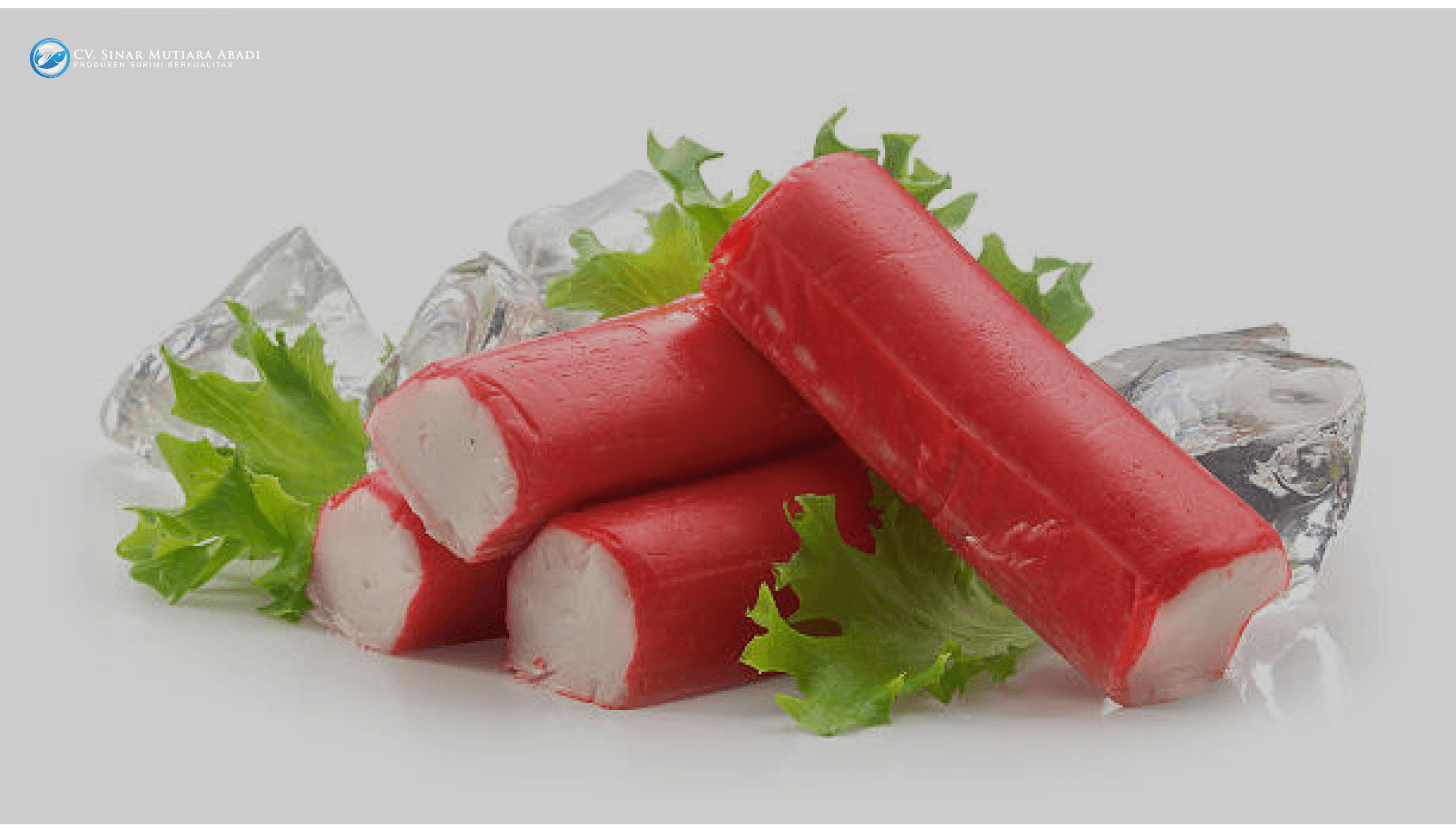
The use of phosphates, a cryoprotectant that consists of salts and other minerals, in surimi production also helps surimi seafood products to reduce the viscosity of the paste. When the viscosity is reduced, the machinability also gets better.
Other than that, the texture and water retention of surimi seafood are also increased if phosphates are added in a proper way. In this case, it is recommended by Hunt et al. (year) to add phosphates as a preprepared solution, which clearly contains high solubility.
In this way, phosphates can actively contribute to enhancing the shelf life of frozen surimi, which also can be seen through its gel-forming ability after 9 cycles of freezing.
There are various forms of phosphates that are added to surimi, which include sodium tripolyphosphate (STPP), sodium hexametaphosphate (SHMP), sodium pyrophosphate (SSPP), trisodium phosphate (TSP), and tetrasodium pyrophosphate (TSPP). Each of these forms has different effects on surimi.
However, phosphates have been considered to affect surimi, as described by Xiong (year) below:
Its capability of good buffering properties could help depolymerize thick filaments.
With the form of triphosphate and pyrophosphate, they could separate the actomyosin from acting like ATP and binding to the head of myosin.
The form of polyphosphates can bind with the myosin tail, which further enhances the dissociation of the myosin filaments to myosin molecules.
Fun fact: Phosphates added to surimi are usually combined with other cryoprotectants, such as sugar and sorbitol.
The Role of Starch in Surimi Products
The use of starch in surimi has been considered the most common and effective way to enhance the texture of surimi products such as fish balls.
Starch in surimi also acts as the filler, with the protein acting as the continuous phase. Using starch in surimi can enhance its gel strength. However, it is considered more effective if it is used in a low concentration at about 0-3% than in a high concentration at 6-9%.
Many researchers have also done tests using different starches, such as tapioca, corn, wheat, and other modified starches, in the production of fish balls with a cooking time of around 3–6 minutes.
The test shows that starch made the fish balls stronger before heating. On the other hand, starch in surimi will weaken surimi products like fish balls after the heating.
The research also found that there are no different preferences in the texture of fish balls produced with and without modified starch.
Sugar and Sorbitol in Surimi
Sugars and sorbitol are the other cryoprotectants, which are mixed with the wet proteins to protect surimi products from any form of deleterious influences that might appear during the freezing and storage method.
Sugars as surimi additives are also in charge of diminishing the possibility of TMAOase, which can still appear even after the surimi leaching process. Other than that, it also has the ability to increase proteins stability by being excluded from the immediate domain of the protein.
Sorbitol has been extracted from many fruits and vegetables, is highly soluble in water, and has a relatively low molecular weight.
In chemical terms, sorbitol is considered stable and does not react with other substances, like sugars do during the Maillard reaction.
Typically, surimi producers use 4-5% sorbitol and 4% sugar with 0.3% sodium polyphosphate for frozen surimi products. However, surimi products made from warm-water species commonly use 6% sugar and 0.3% sodium polyphosphate.
Salt and Flavor Development
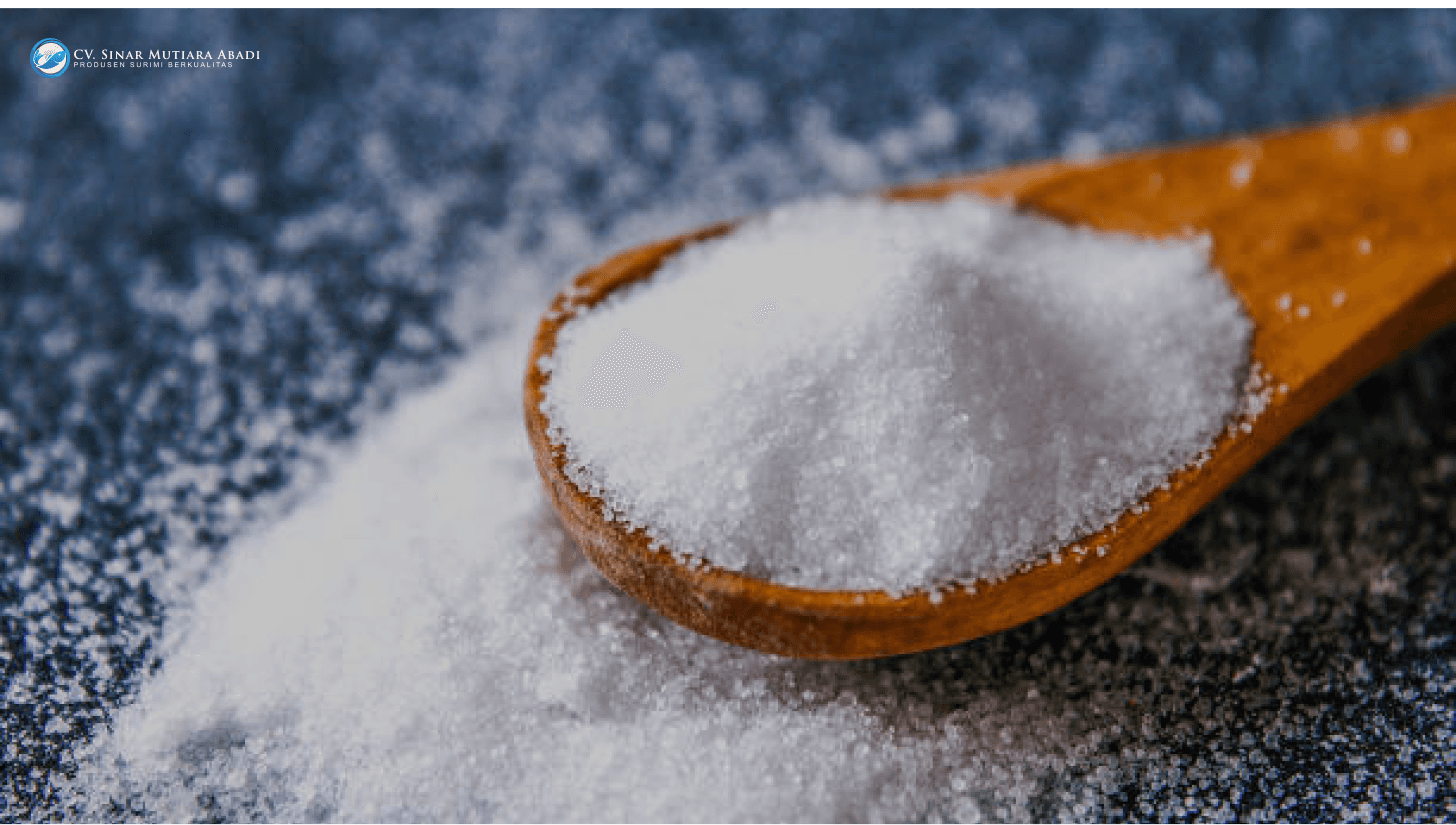
Salt is another important additive to extract the myofibrillar proteins. During the thermal processing, surimi forms a three-dimensional structure.
Salt has been used to enhance the flavor of surimi products for ages. With salt as a surimi additive, surimi producers are able to extract myofibrillar proteins during the production, which help to connect the proteins and form a good quality of texture with a balanced flavor. It has also been used to unfold myosin heavy chain (MHC).
However, the use of salt with low concentration will affect both the solubility as well as the extractability of surimi proteins. Consequently, the gel structure and mechanical properties are generated with poor qualities.
But it is not recommended to use too much salt either, as it could ruin the original flavor and sweetness of surimi products. Other than that, salt can also be used to change the balanced flavor of surimi products, pushing some flavor parts out.
Consuming too much salt will also affect the consumers’ health negatively and could potentially result in serious and severe health problems such as blood pressure, which further leads to cardiovascular diseases.
Conclusion
Surimi additives play a major role in surimi production for their capability to maintain the quality and texture, as well as the flavor, of surimi products, from crabsticks to fish balls.
The use of cryoprotectants in surimi, such as sugar, sorbitol, and phosphates, is beneficial in terms of protecting the protein structure, especially during the freezing and storage process. Cryoprotectants in surimi protect surimi products from getting quality loss, which further extends surimi shelf life.
Phosphates in surimi could enhance the water retention as well as improve the machinability of surimi. Meanwhile, starch, as previously discussed, has the power to make surimi’s texture and gel strength better when it is used in small amounts. Other than that, salt also helps the flavor development for surimi products, even though it is important to take note of any possibility of serious health problems caused by high intake of salt.
On the whole, these surimi additives are the secret to the surimi industry's success in maintaining the overall quality, especially during the freezing and storing process.


Adress: Gajah Mada KM 4, Banyudono, Kaliori, Rembang 59252
Phone Number: +62 822 98989 169
E-mail: marketing@sinarmutiaraabadi.co